- Multiple loans to CARS Protection Plus, which provides insurance to dealers and service centers and is headquartered in Monroeville, Pennsylvania
- A second-lien loan to Global Knowledge, an IT training provider located in Cary, North Carolina
- A second-lien loan to Boston-based healthcare cost management company Zelis.
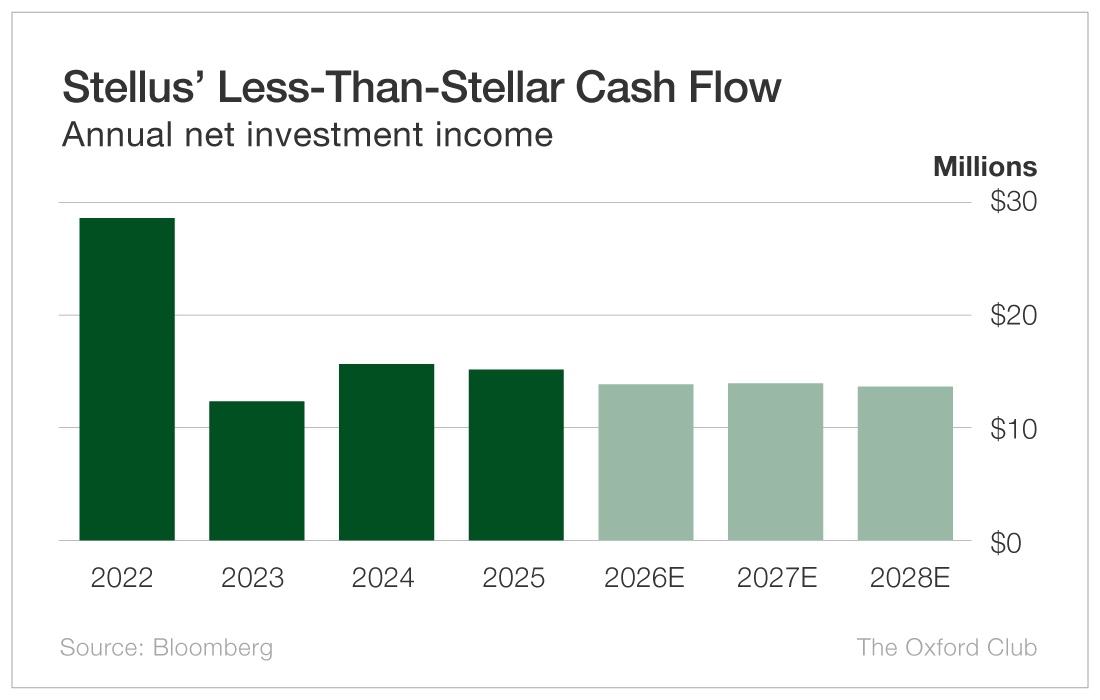 Meanwhile, Stellus hasn’t been able to afford its dividend since 2022. Last year, it paid shareholders $45.3 million in dividends despite bringing in just $15.1 million in NII. That resulted in a payout ratio of 300%. (Remember, for BDCs, the Safety Net model wants to see payout ratios of below 100%.) In 2026, Wall Street expects payments of $49.7 million even though NII is forecast to drop to $13.7 million. That would be an even more dangerous payout ratio of 364%. Stellus pays a monthly dividend of $0.1133 per share, which comes out to a 13.6% yield. However, today’s dividend is below what the company paid in 2023, 2024, and 2025, when shareholders received $0.1333 per share each month. Stellus also cut the dividend in 2020 during the pandemic. So we have a company with declining cash flow, a dividend that is multiples higher than its cash flow, and a track record of slashing the dividend. If there were a textbook example of a company whose dividend is likely to be cut, Stellus Capital Investment would be it. The dividend is not safe. Dividend Safety Rating: F
  What stock’s dividend safety would you like me to analyze next? Leave the ticker in the comments section. You can also take a look to see whether we’ve written about your favorite stock recently. Just click on the word “Search” at the top right part of the Wealthy Retirement homepage, type in the company name, and hit “Enter.” Also, keep in mind that Safety Net can analyze only individual stocks, not exchange-traded funds, mutual funds, or closed-end funds. The post How Safe Is This BDC’s 13% Yield? appeared first on Wealthy Retirement.
 Source: https://wealthyretirement.com/safety-ne ... source=app